
Featured in Project Scotland
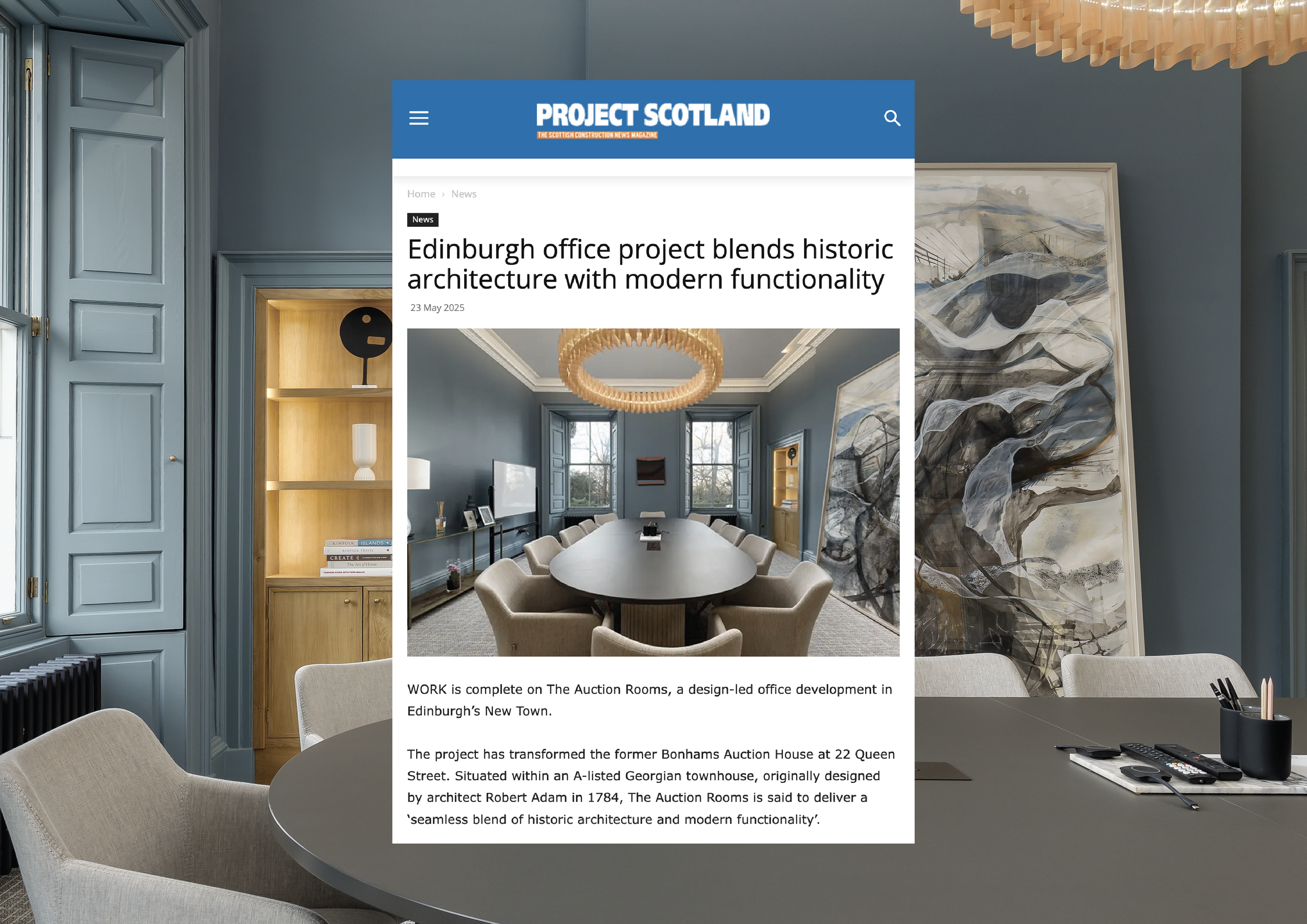
NM Design Studio’s work on The Auction Rooms has recently been featured in Project Scotland, highlighting the transformation of a historic Edinburgh building into a contemporary, high-end workspace.
The article explores how careful, considered design decisions can fundamentally change how a building functions and feels, without compromising its architectural integrity. Rather than pursuing a dramatic overhaul, the project focused on aligning brand identity, interior design and spatial experience to support modern ways of working within a characterful setting.
Originally a traditional auction house, the building presented both opportunity and constraint. Its heritage features offered depth and authenticity, while its layout required sensitive rethinking to meet the needs of contemporary businesses. NM Design Studio approached the project holistically, considering how people move through the space, how the interiors support different working styles, and how the brand is expressed subtly through materiality, atmosphere and detail.
As highlighted by Project Scotland, the success of The Auction Rooms lies in its balance. Historic architecture is retained and respected, while modern functionality is seamlessly integrated. The result is a workspace that feels refined but approachable, professional yet human - a place designed not just to be occupied, but to be experienced.
This recognition reflects a broader shift taking place across the commercial office sector in Scotland. Businesses are increasingly seeking environments that offer more than efficiency alone. Character, comfort, flexibility and a clear sense of identity are becoming central to how workspaces are evaluated, particularly as hybrid working reshapes expectations.
For NM Design Studio, the feature underscores the value of an experience-led approach to commercial interiors. By treating brand, space and user experience as interconnected, even incremental design choices can create meaningful impact - enhancing how a building is perceived, used and remembered.
You can read the full Project Scotland article here, which explores the project in more detail and places it within the wider conversation around adaptive reuse and the future of workspaces in Scotland.
